See you? See me. See I. See us. This is a foot. This is a hand. You are them. Together, this is we.
Puzzling. Distorted. Disjointed. Challenging.
Existential. Metaphorical. Philosophical. Whimsical.
Challenging to understand; challenging to forget. Long after I left, I was still examining what I thought I knew about me, my world, our environment, and how I apply to society.
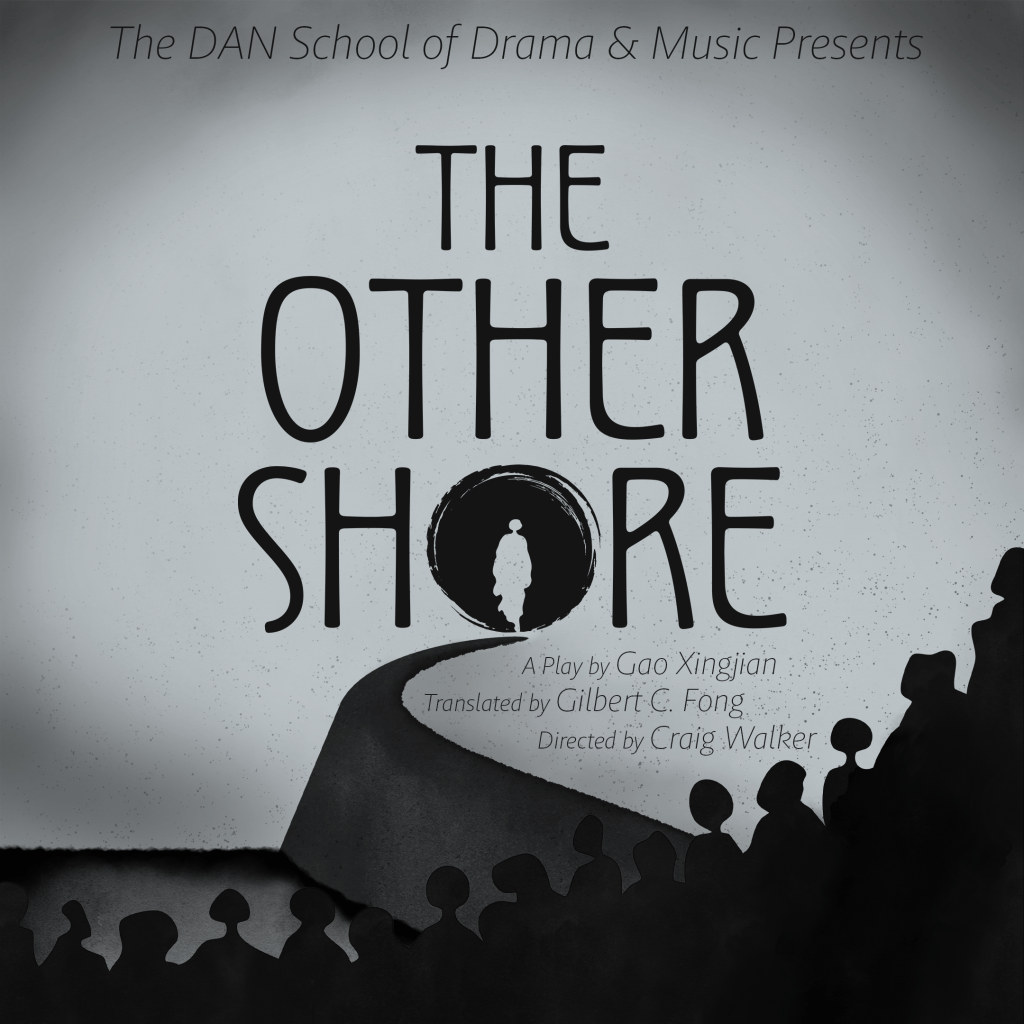
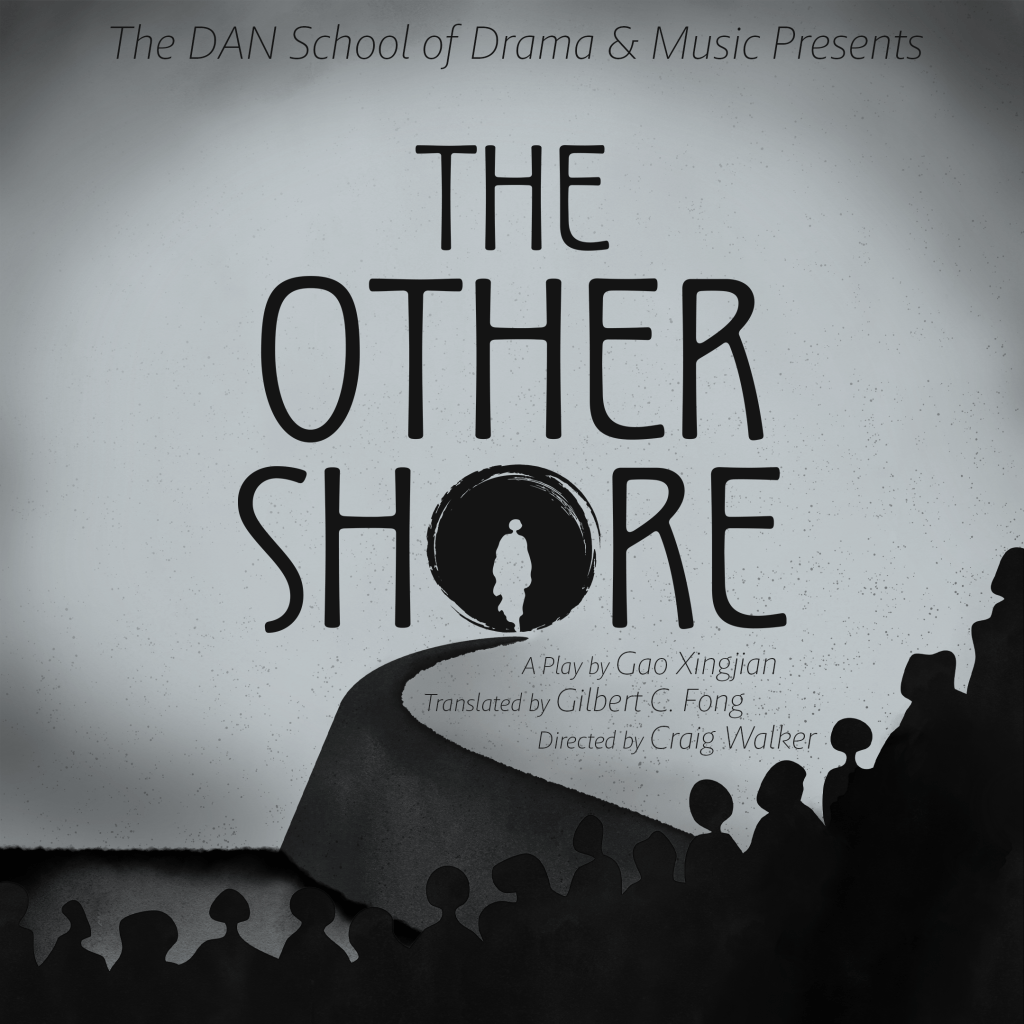
This is what happens when you swim to The Other Shore on stage now at The Power Corporation of Canada Studio Theatre (main level of the Isabel Bader Centre for The Performing Arts), presented as the 2024 Fall Major by The DAN School of Drama & Music.
Written by Gao Xingjian and translated by Gilbert C. Fong, Craig Walker directs his ensemble where many casts have swam before and successfully breaches The Other Shore.
To fully understand the gravity of the production, one must shirk whatever perception they may have of conventional theatre and leave their mainstream notions at the door. Only then can you lend yourself to the dream-like world of this fascinating think-piece.
Xingjian’s illustrious career as a playwright, painter, critic, photographer and director successfully captured lightning in a bottle with The Other Shore (1986); critically acclaimed and securing the Nobel Prize for Literature (2000). The play successfully manages to conflate Xingjian’s interest in “exploring issues of universal relevance to all people everywhere,” and the influence of European theatre artists as he toured Germany and France.
However, despite being universally panned and globally reproduced by theatre troupes around the globe, Xingjian’s own foray into bringing The Other Shore to the stage would prove futile in his home country of China. Shortly after publishing, the Chinese Communist Party (CPP) would halt the production a mere five weeks into rehearsals. According to Craig Walker’s Director notes; “Gao did not present collectivism in the way that they saw it, as the perfect and beautiful answer to all the most important human dilemmas.” He writes, ” … the temptation to collectivism is always there, because it is deeply ingrained in our nature, and that can lead us into mob-like behaviour, into pressures to conform to group thinking, and into a loss of individual conscience.” Xingjian would ultimately leave China in 1987, and was a naturalized French citizen by 1997. His literary works and productions include Absolute Signal (1982), The Bus Stop (1983), Wild Man (1985) and Soul Mountain (1990).
On this dark, dismal evening in Kingston, the DAN School of Music and Drama sought to breathe life into the looming linger of cold November air with their performance of The Other Shore. In its playscript, the production leaves much to interpretation – notably for its performance space requirements: “The play can be performed in a theatre, a living room, a rehearsal room, an empty warehouse, a gymnasium, the hall of a temple, a circus tent, or any empty space as long as the necessary lighting and sound equipment can be properly installed.” Tonight, it’s being featured at the Isabel Bader Theatre. The audience is sat on opposite sides; each seat feeling front row for this intimate portrait of existentialism, surrealism, and its intricacies.
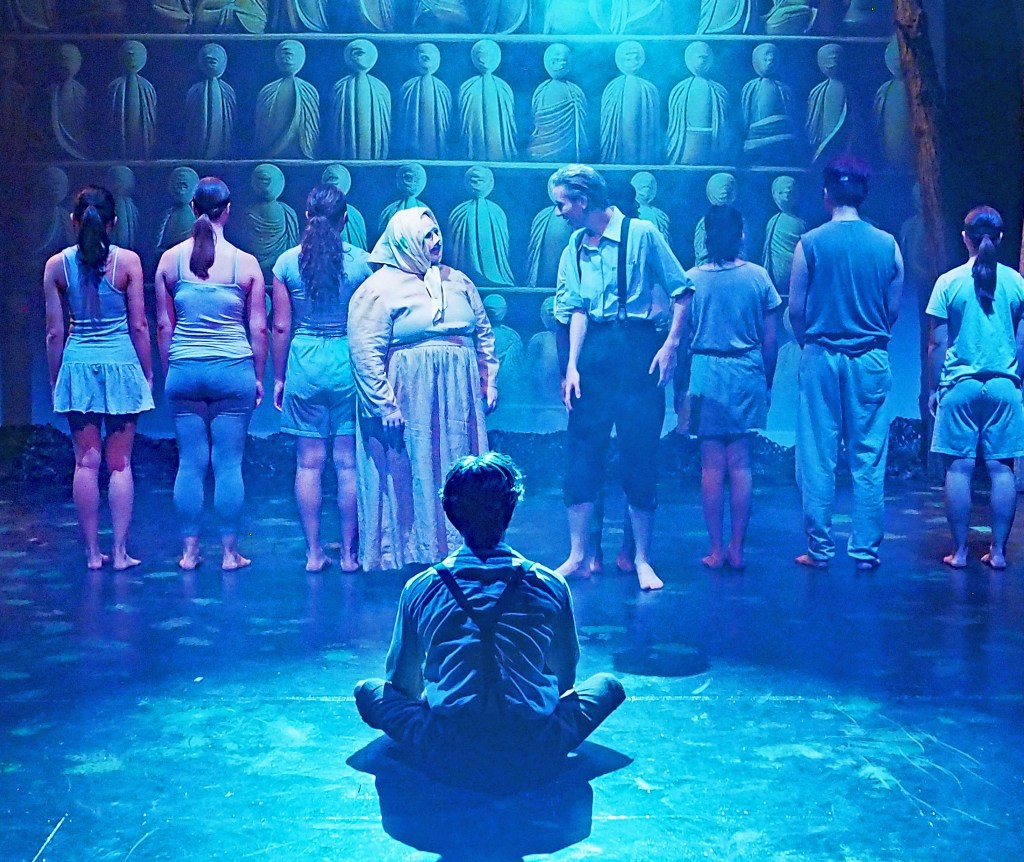
The production infuses dramatic lighting, sights, sounds, and fog machines. While our performers are mainly clad in unassuming grey, The Other Shore only offers costumes to fewer than one or two cast members at a time during rotating sequences.
To open the production, we are met with two people holding opposing ends of a rope. They pull. They push. They examine their relationship with one another through the rope. They invite others to their game. Now, there are many ropes and many people, and many relationships if they continue to each hold a handle on the rope. What does the space between them mean? What happens if one person pulls harder? What happens if one lets go? How far can they pull? Who will fall? Who will let them?
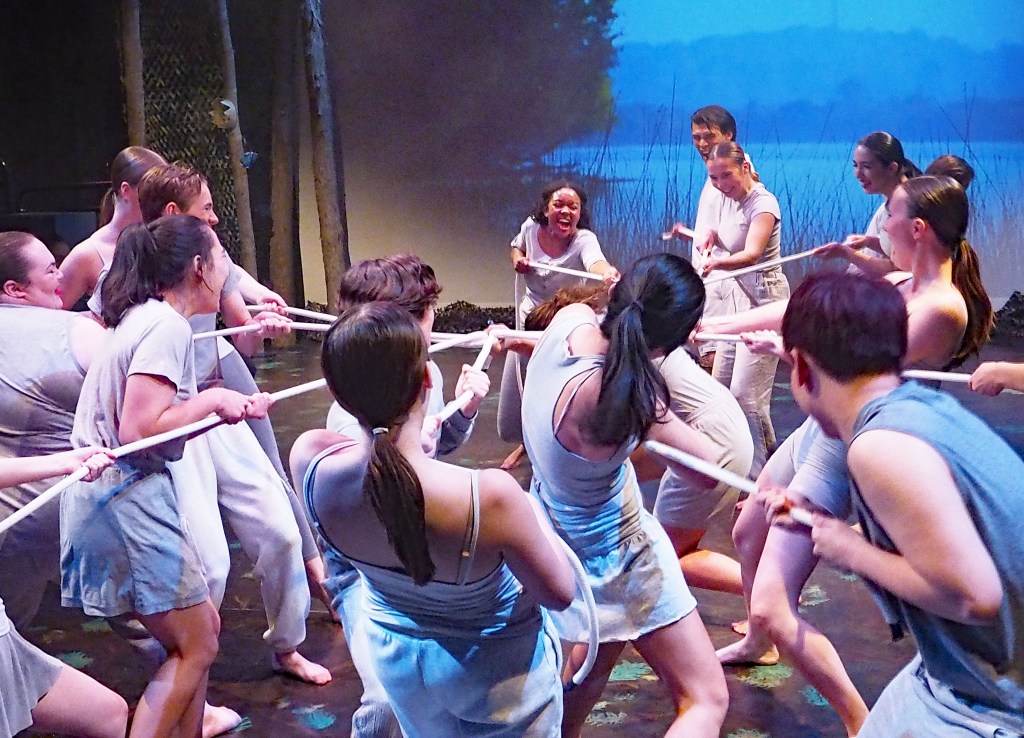
Before we are given our answers, our performers eagerly drop their ropes in favour of swimming to the other shore. Our first dream sequence has begun.
Wait – wait … did someone not make it to the other shore? Did … did someone get left behind?
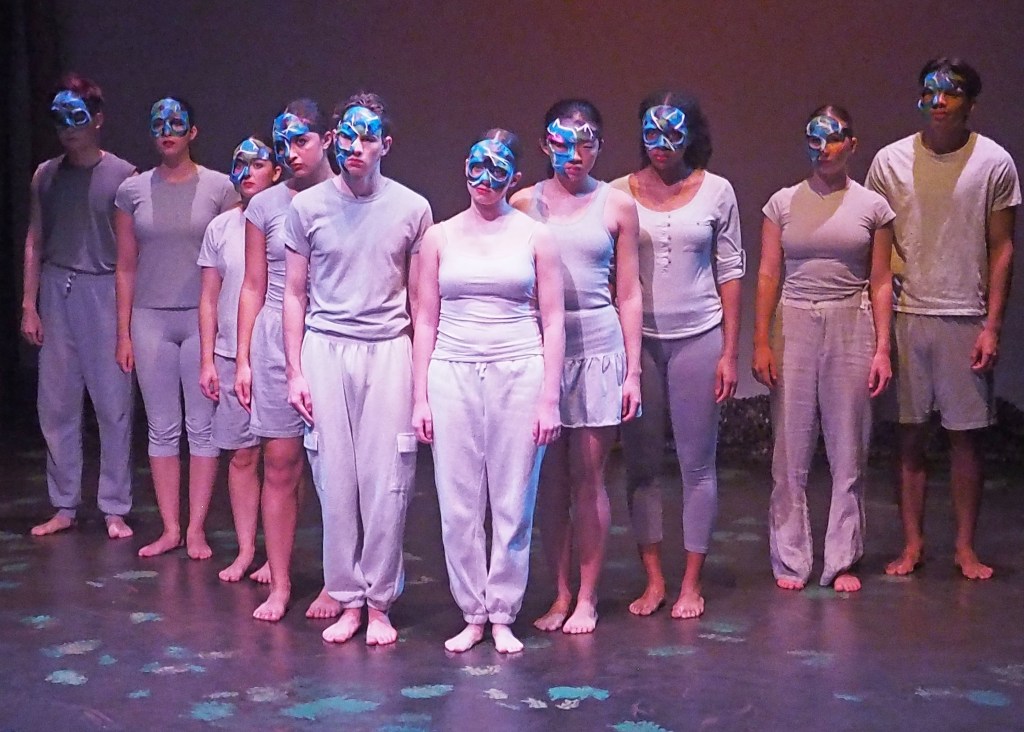
Donned in half-masks, our group lifts from the waters. They are confused, unable to speak, or understand. They are rudimentary, and ignorant. They do not have words. But … who’s this? A swan-like nymph wades through the group. “This is a foot,” she tells them. “This is a hand.” They chant back to her: “a foot!” “Good!” she praises, lovingly touching their faces, their hair; stroking their arms and chiding them like children. And from the midst, a man appears before them. “Are you the one who didn’t make it?” he asks her.
Our scene is overshadowed by our cast growing mob-like. Allowing their intrusive thoughts to come together in group-think. Questioning, then challenging, then threatening the nymph who taught them they were people. The man is powerless to stop the crowd.
The scene ends.
Over the next hour, The Other Shore continues in this vein. Unconnected scenes, disjointed thought patterns. Here we are with a card player. In another, we see the man’s shadow. Now our cast is dancing. How did his mother suddenly appear? Or did she? What are these manifestations and what do they mean? Are we in the man’s dream, or consciousness? Are we in our own?
The Other Shore does not seek to answer the questions for you. It aims to metamorphose your own undoing by providing the audience with a series of sequences that ask you to re-evaluate your own consciousness. What have you seen in your dreams? The mornings you wake to confuse, and confounding; can you remember what it was that laid your mind awake while your body slept?
The cast beautifully re-enacts each puzzling sequence; one fluidly to the next. With a tight ensemble and few performers, many are tasked with multiple roles, complex monologues, and no intermission to catch their breath between acts. The play moves at a continuous pace, some scenes involving dance and motion (as directed by the award-winning Stephanie Graham.) With a minimal set, and fewer props, the cast works as hard as the audience to elevate the production through imagination; a feat as impressive as taking The Other Shore from disconnected dreamscapes to one tightly woven performance. Outwardly, the play is jarring and confusing. Inwardly, it is intuitive, encapsulating, and thought-provoking.
A brava to director Craig Walker for bravely optioning The Other Shore onto the Kingston stage. It is a bold piece, relying on its audience as much as its cast; from imagining to performing, to seeding an idea into the consciousness of those watching and absorbing the messaging.
Whether or not Gao Xianjing was cognizant that he’d continue to delight audiences decades later, the truth remains the same:
We are all on this side, hoping to reach The Other Shore.
Performance Dates and Times:
Evening Performances: November 14th-16th and November 20th – 23rd at 8:00pm
Matinee Performances: November 17th and November 23rd-24th at 2:00pm
Mask Encouraged Performance: November 17th at 2:00 pm
Relaxed Performance: November 21st at 8:00pm
 CARE HUMPHRIES
Leave a comment